
Rebound Therapy Room
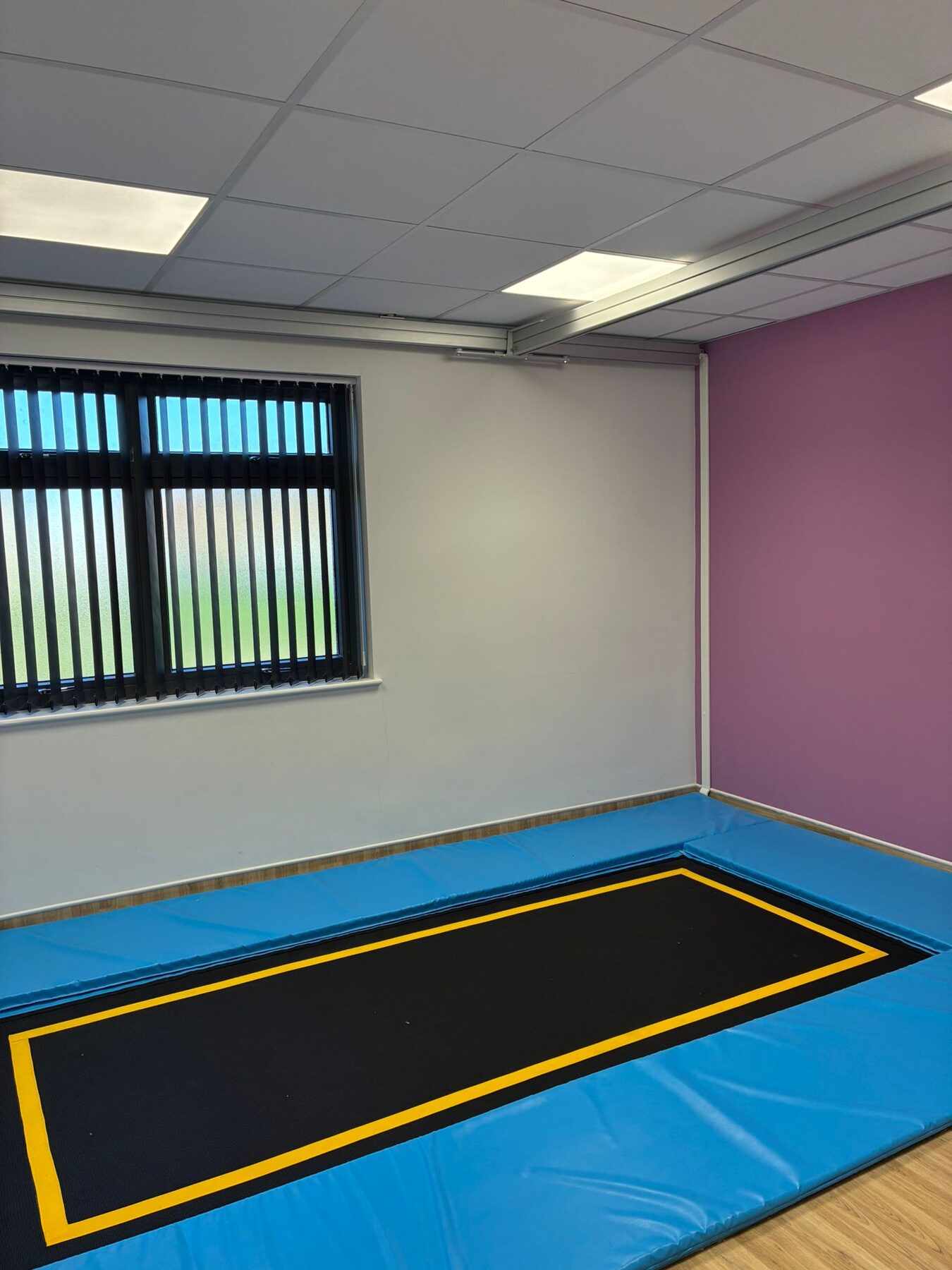
A full-size trampoline turns movement into therapy that builds balance, strength and confidence, guided by our support staff.
Where exercise becomes play
Our Rebound Therapy Room contains a full-size trampoline used for therapeutic exercises. Sessions are guided by our support staff, who support clients as they bounce. Depending on ability, clients can perform gentle bouncing, seated weight shifts or targeted movements. We also integrate fun elements like catch-ball games or light rhythm exercises on the trampoline.
- Full-size trampoline for therapeutic movement
- Supervised throughout by our support staff
- Sessions tailored to each client's ability
In essence, rebound therapy turns exercise into play, yielding gains in physical health and emotional well-being.
Why families choose the Rebound Therapy Room
Experienced Staff
Our support staff, experienced with rebound sessions, ensure exercises are safe, progressive and fun.
Individualised Sessions
Each client's bounce routine is tailored to their abilities, including stretching or learning jumps.
Dual Therapeutic and Recreational
Sessions combine movement goals with games, maximising enjoyment and participation.
Motivating Experience
The trampoline's buoyant movement often calms sensory needs and encourages communication and engagement.
Rebound therapy has powerful benefits for motor and sensory development.
Rebound Therapy Room · Hebburn House
How the room helps
Rebound therapy has powerful benefits for motor and sensory development. The rhythmic movement provides deep pressure input that many find calming. It helps develop core strength, balance and coordination as clients adjust to the motion. Studies and reports note that rebound sessions improve muscle tone and core stability, even enabling some who usually use wheelchairs to stand and move. Socially, many clients become highly motivated during rebound; we've observed clients, especially those on the autism spectrum, communicate more and follow instructions eagerly because the trampoline is so engaging. Success on the trampoline boosts self-esteem tremendously, giving clients something they can "do well", which carries over to other activities. In essence, rebound therapy turns exercise into play, yielding gains in physical health and emotional well-being.
Strength and balance
Rebound helps develop core strength, balance and coordination as clients adjust to the motion, improving muscle tone and core stability.
Calming sensory input
The rhythmic movement provides deep pressure input that many find calming, stimulating the balance and body-position senses.
Motivation and confidence
Success on the trampoline boosts self-esteem, with many clients communicating more and engaging eagerly because the activity is so engaging.
The practical questions
The things families ask us most. If there’s something not covered here, our team is always happy to talk it through.
Come and see it for yourself.
The quickest way to know if it’s right for your loved one is a visit — call the care team or book a session.